
The Best Pistol Red Dots — Carry, Duty, and Competition
Posted by Blackstone Shooting Sports on Jul 21st 2026
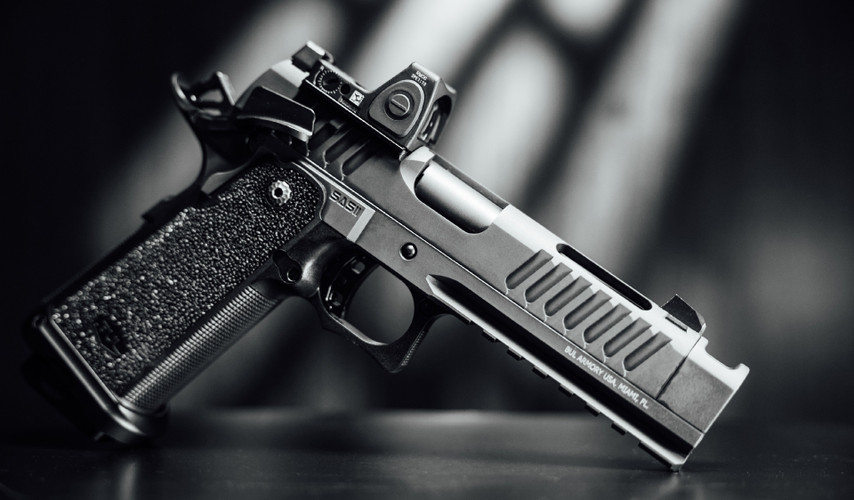
15 optics in 3 categories + the 5 questions everyone asks · Charlotte, NC · 2026
Putting a red dot on your pistol is the single biggest upgrade in modern handgun shooting — and the wall of options is genuinely confusing, because the right optic depends entirely on the job. A carry gun, a duty-size pistol, and a competition rig want three different things.
So here's the list the way we'd walk you through it at the counter: three categories, five proven optics in each, and then straight answers to the five questions we hear every single day.
CONCEALED CARRY — MICRO OPTICS (K / RMSC FOOTPRINT)
For micro-compacts and slim slides. Small, light, and built to disappear — the K/RMSc footprint class that fits guns like the P365, Hellcat, 43X, and Shield Plus.
▸ Holosun 507K X2 — The default answer in this class — proven durability, long battery life, shake-awake, and the multi-reticle system that lets you run dot, circle, or both.
▸ Holosun EPS Carry — The enclosed-emitter option — the emitter is sealed inside, so rain, lint, and pocket debris can't block the dot. Made for guns that live against your body.
▸ Trijicon RMRcc — The carry-size version of the optic that started it all. Trijicon toughness in a slim package — the pick for people who want the most proven name on their carry gun.
▸ Sig Sauer ROMEOZero Elite — Lightweight, affordable, and a natural pairing on P365-series pistols. A lot of optic for the money in this class.
▸ Vortex Defender-CCW — Vortex's purpose-built micro carry dot on the Shield RMS footprint — fast-rack front texture for one-handed slide racks, motion activation, and the unlimited unconditional warranty that makes it an easy yes.
FULL-SIZE — DUTY & EVERYDAY (RMR / DPP CLASS)
For compacts and full-size pistols — home defense, duty use, and do-everything guns. Bigger windows, bigger batteries, maximum durability.
▸ Trijicon RMR HD — The evolution of the duty standard — the optic entire agencies bet on, now with a bigger window and a front-facing light sensor. If it has to work, this is the benchmark.
▸ Holosun 507C X2 — The best-seller for a reason — RMR-footprint compatibility, huge battery life, solar backup on some versions, and the price-to-toughness ratio that made Holosun a household name.
▸ Aimpoint ACRO P-2 — Fully enclosed and famously abuse-proof — the optic that made enclosed emitters a category. The pick when failure is not an option.
▸ Trijicon RCR — Trijicon's enclosed-emitter answer — sealed like an ACRO, but it mounts to the standard RMR footprint, so it drops onto RMR-cut slides without adapter plates. Duty-grade toughness with the widest slide compatibility in the enclosed class.
▸ Vortex Defender-ST Enclosed — The new enclosed-emitter Defender — fully sealed against rain, dust, and impact, with solar backup that switches between sun and battery automatically, multi-reticle options, and the DeltaPoint Pro footprint.
COMPETITION — BIG WINDOWS, FAST EYES
For match guns and comped builds — where the biggest possible window and the fastest dot pickup win, and concealment doesn't matter.
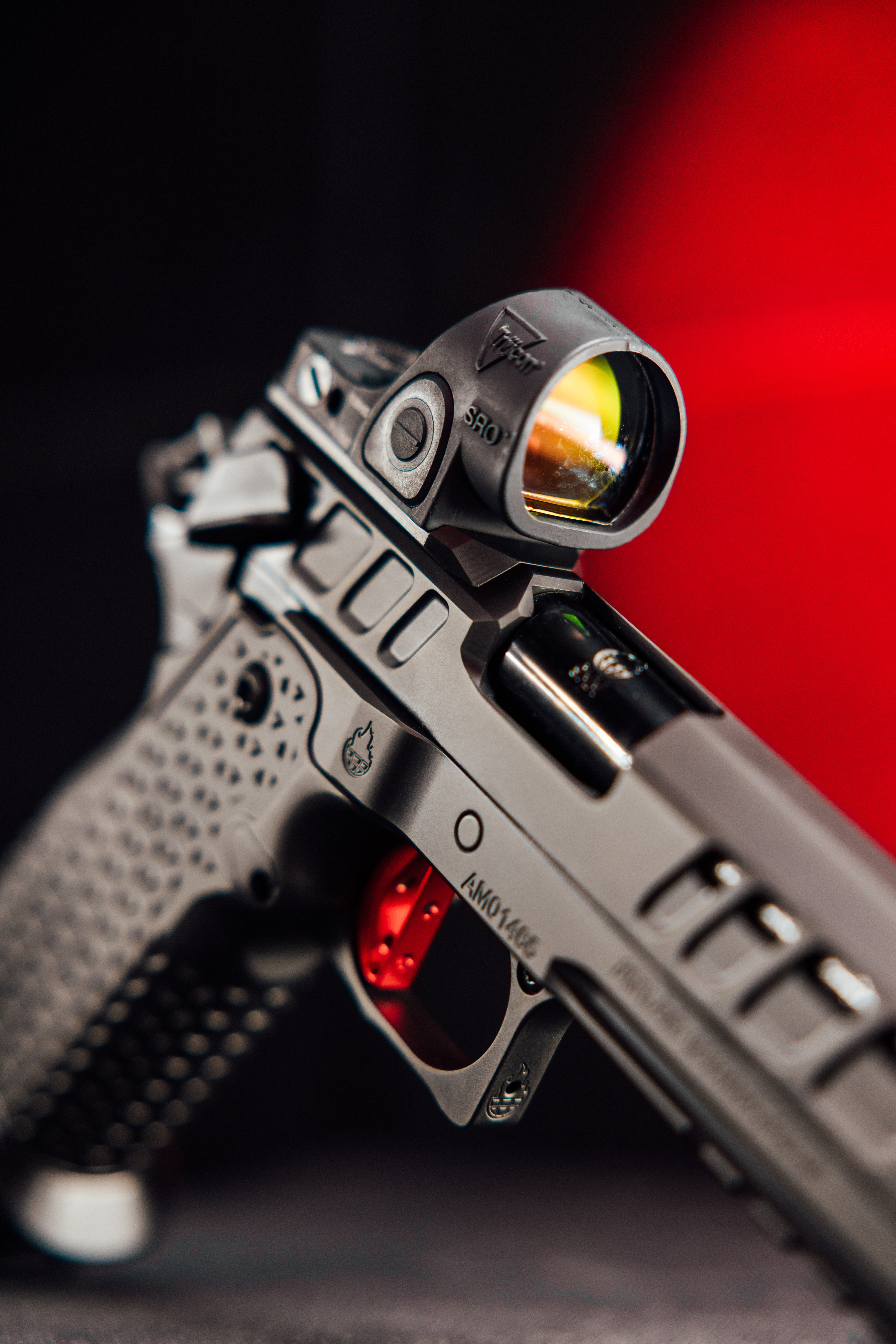
▸ Trijicon SRO — The competition icon — that huge round window is the fastest dot-finding experience in pistol optics, and it's everywhere on match-day firing lines.
▸ Holosun 507COMP — Purpose-built for the game — oversized window, competition-focused reticle options, and the Holosun value formula applied to match shooting.
▸ Vortex Defender-XL — Designed around a massive window and tall glass — made specifically for competition and comped pistols, backed by Vortex's no-questions warranty.
▸ Sig Sauer ROMEO3MAX — A Carry Optics division staple — big window, top-loading battery, and a long track record on USPSA-style match guns.
▸ EOTech EFLX — The holographic-sight maker's take on the pistol dot — big square window, clean glass, and a duty-and-competition crossover that's earned a fast following on match guns.
One honest note on all fifteen: the ‘best’ optic is the one whose footprint matches your slide, whose window your eye finds fast, and whose controls you can actually run. Which is exactly what the next section is about.
THE 5 QUESTIONS EVERYONE ASKS
- What footprint do I need — and why does it matter so much?
The footprint is the physical mounting pattern — the screw holes and recoil bosses — that connects optic to slide, and it's the first thing to check, not the last. Micro carry optics mostly use the Shield RMSc pattern (often called the ‘K footprint’ after Holosun's K series). Full-size optics mostly use the Trijicon RMR pattern, with the DeltaPoint Pro and ACRO patterns also common. The rule: find out what your slide is cut for — or what plates your gun ships with — and shop only optics built on that pattern. ‘Optics-ready’ does not mean ‘fits everything.’ When in doubt, bring the gun in — matching footprints takes us about thirty seconds at the counter.
- Red vs. green vs. gold — does reticle color actually matter?
More than people expect, less than the internet argues. Red is the standard: best battery life, lowest cost, and completely proven. Green sits closer to the peak of human eye sensitivity, so most shooters perceive it as brighter — it tends to stand out better in bright daylight and against green or brown backgrounds — at the cost of somewhat shorter battery life and a higher price. Gold is the newer option, marketed as a middle ground: warmer than red, high contrast against most backgrounds, and a genuine help for some shooters with red-color deficiency. And that's the real answer — if you have any degree of color blindness (about 1 in 12 men do), the ‘best’ color is whichever one YOUR eye picks up instantly. Look through all three in the store before you decide; it's a ten-second test that settles the whole debate.
- What reticle size should I pick — 2 MOA, 3 MOA, 6 MOA, circle-dot?
Smaller dots are more precise; bigger dots are faster to find. A 2–3 MOA dot covers less of the target, which helps for precise shots at distance — the common pick for duty and range guns. A 6 MOA dot is easier for your eye to snag under speed and stress — which is why it's popular on carry guns, where fast beats surgical. Circle-dot reticles (a large ring around a small dot) try to give you both: the ring grabs your eye fast, the center dot gives you precision. There's no wrong answer — but if you're new to pistol dots, a bigger dot or circle-dot will make your first months dramatically less frustrating, because the hard part of learning a red dot is finding it.
- How long do the batteries actually last — and what happens if one dies?
Modern pistol optics are measured in years, not weeks — tens of thousands of hours is common at medium brightness, and features like shake-awake (the dot sleeps when the gun sits still, wakes on movement) stretch that further. Some models add solar backup on top. The practical routine: change the battery once a year on a date you'll remember, whether it needs it or not, and prefer optics with a side-loading or top-loading battery tray — on models where the battery sits under the optic, a change means re-zeroing. Do that, and a dead dot becomes something that happens to other people.
- Do I still need iron sights if I run a red dot?
Strong recommendation: yes — suppressor-height (tall) iron sights that you can see through the bottom of the optic window. That's called a co-witness, and it's your backup if the dot ever fails, plus a familiar reference while you're learning the optic. Many optics-ready pistols come with standard-height sights that the optic blocks entirely, so budget for tall sights when you budget for the dot. They're cheap insurance on a defensive gun — and one more thing we can set up in the same visit as the optic install.
|
PUT A DOT ON IT — AT BLACKSTONE • Every category above is in the case — look through them side by side and let your eye pick the window, the color, and the reticle • Footprint matched, optic mounted, screws torqued to spec, and a lane ready to zero it — all in one visit • Tall sights, plates, and mounting hardware for your exact model at the counter • 2001 Wilkinson Blvd, Charlotte · (704) 414-6020 |